
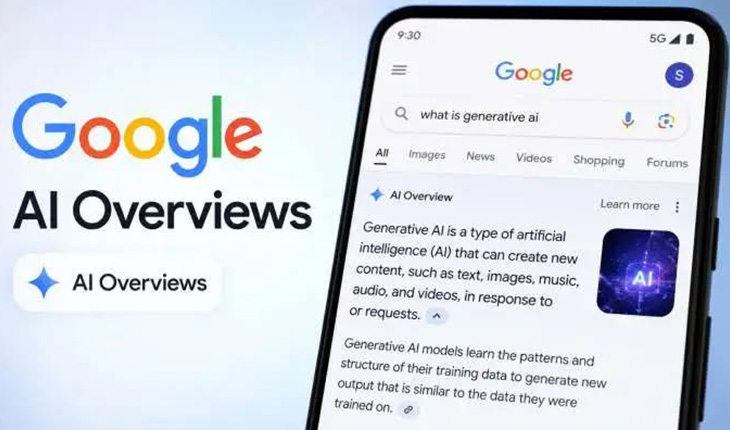
If you blinked, you probably missed it. On August 14, 2026, Google quietly slipped a new model, Gemini 3.7 Flash, into AI Mode‘s model picker, barely 24 hours after Google DeepMind released it to the public. No fireworks, no Search Central blog post, no line item on a status dashboard. Just a single X post from a Google exec and a new option sitting in a dropdown menu.
For most people scrolling past that post, it looked like a minor product update. For anyone doing SEO or GEO (Generative Engine Optimization) work, including a lot of our clients here at 435 Digital in Abu Dhabi, it’s the kind of change that quietly reshuffles who gets cited, who gets summarized, and who gets skipped entirely when someone asks Google’s AI a question. So, let’s break down what actually happened, who’s affected, and what you should be doing about it right now.

What Actually Happened
Google DeepMind released Gemini 3.7 Flash on August 13, 2026, calling it a “workhorse” model built on algorithmic improvements to the reasoning foundation carried over from Gemini 3.6 Flash. The launch announcement said nothing about Search or AI Mode; it read like a standard developer-focused model release.
Then, one day later, Google added it as a selectable model inside AI Mode. Robby Stein, VP of Product for Google Search, confirmed the move on X, describing the model as better at “following instructions and understanding your intent, so you get even more helpful responses.”
That’s it. That’s the entire public paper trail. Compare that to how Google typically handles a core algorithm update: status dashboard entries, rollout windows, confirmation threads, and the contrast is striking. A model swap that can influence which brands get surfaced in an AI-generated answer arrived with less documentation than a minor UI tweak.
Who Can Actually Use It Right Now
Before anyone gets too excited (or too worried), it’s worth knowing exactly how limited this rollout still is:
- It’s live worldwide, but only in English.
- Access is restricted to Google AI Pro and Google AI Ultra subscribers, not the free tier.
- It sits under a “Gemini 3 models” heading in the model picker, next to the existing “Auto” and “Pro” options, reachable through the “+” icon in AI Mode’s “Ask anything” bar.
- Google hasn’t said whether it will eventually become the default model, or whether it feeds into the automatic “Auto” routing system that launched back in November.
So no, this isn’t rolling out to every Search user tomorrow. But defaults have a habit of shifting fast in this space, and that’s exactly the pattern worth watching.

Under the Hood: What the Model Can Actually Do
For anyone curious about the technical side, Gemini 3.7 Flash brings a few upgrades worth flagging:
- It accepts text, images, audio, video, and documents as input.
- It handles a context window of up to one million tokens, with output capped at 64,000 tokens.
- It includes adjustable “thinking” configurations, letting a system dial answer quality, response speed, and computational cost up or down depending on the task.
That combination — bigger context, tunable reasoning depth — is exactly the kind of upgrade that changes how an AI system decides which sources to trust and cite.
This Isn’t a One-Off; It’s a Pattern
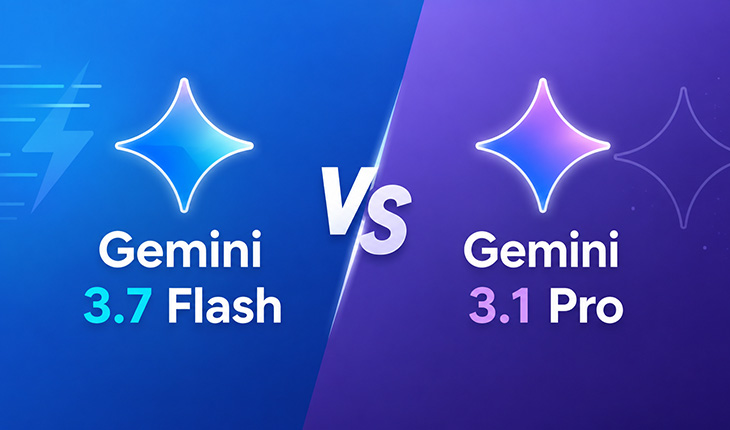
Zoom out, and this fits a rhythm Google has kept up since AI Mode launched. Gemini 3 Pro arrived in AI Mode in November, Gemini 3 Flash became the default the month after, and Gemini 3.5 Flash took over as the global default at I/O in May. By one count, this marks at least the third model addition to Search in 9 months, following Gemini 3 Pro in November 2025 and Gemini 3.5 Flash-Lite in July 2026.
In other words: the model behind AI Mode is not a fixed piece of infrastructure. It’s a moving target, and every swap is a fresh reshuffle of how answers get generated and who gets quoted.

What Early Testers Are Noticing
It’s still early days, and this needs to be read as anecdotal, not conclusive, but at least one SEO tester poking at local search results found that the ranked list of entities in an AI Mode answer stayed largely the same after the swap. What changed more often were the specific URLs being cited as sources. That’s a single observation from an individual practitioner on X, not a controlled study, so treat it as a signal worth watching rather than a settled finding.

Why Any of This Should Matter to Your Brand
Here’s the part that actually affects your bottom line: whichever model sits behind AI Mode decides who gets cited, how your brand gets described, and whether you show up at all in an AI-generated answer. A model swap isn’t a footnote in a changelog; it’s a visibility event, full stop.
What should you do about it? Re-baseline your AI Mode citation and answer monitoring now, before you conclude any shift in visibility. If you don’t mark this date, you won’t be able to tell whether a dip or a gain next month is genuine or just noise from the model change.
How Frequently Does Google Change the AI Mode Model?
Based on the timeline above, Google has swapped or added models behind AI Mode roughly every couple of months since launch; sometimes silently, sometimes with a brief note from a product lead. Treat “the model” as a variable, not a constant, in any long-term GEO strategy.
Working With a Digital Marketing Agency in Abu Dhabi That Actually Tracks This
This is exactly the kind of shift that gets missed by teams juggling everything in-house without dedicated GEO monitoring. At 435 Digital, our content and SEO team tracks these AI Mode changes as they happen, so our clients’ visibility data stays clean and their citation strategy stays current- not reactive.
If your brand depends on showing up when someone asks Google’s AI a question, now’s a good time to check where you actually stand. Get in touch with 435 Digital and let’s re-baseline your AI search visibility together.