
Sit in any Abu Dhabi coffee shop for ten minutes, and you’ll hear at least four languages floating between tables. That’s really the whole argument for a bilingual social media strategy UAE businesses can’t keep putting off. It’s not a nice-to-have. It’s just what the market looks like now.
Consider this: expats make up close to 89% of the UAE’s population. Emirati citizens? Around 11%. That ratio puts the country among the highest expat concentrations on earth, behind only the Vatican. By May 2026, the population had climbed to 11.57 million. So, when a brand builds its whole content plan around “the Emirati audience” and leaves everyone else out, it’s quietly writing off nine out of every ten potential customers. That’s not a small gap to ignore.

What the Population Numbers Actually Mean for Marketers
It’s easy to treat these figures as background trivia, but they change everything about how language should work in your content plan. A social media strategy an Abu Dhabi business puts together in 2026 has to speak to a genuinely global crowd living within one country’s borders: South Asian families, European transplants, Emirati locals, all scrolling the same feed, often in the same building. There’s no single “local” voice here the way there is in, say, Cairo or Riyadh.
Arabic or English — Which One Actually Wins?
Here’s the part that trips a lot of brands up.
Arabic is the country’s native tongue, sure. But English is what actually dominates UAE social content, and that’s kind of the opposite of what happens everywhere else in the region:
- Egypt: 82% of users prefer posting in Arabic
- Saudi Arabia: 96% prefer Arabic
- UAE: 60% prefer English
English still sits at the top of the list here, with Arabic, French, and a scatter of other languages trailing behind, a pretty accurate snapshot of how mixed this country really is.
Don’t take that as a green light to drop Arabic, though. That’s the mistake. The UAE’s expat-heavy makeup is exactly why English works so well as a reach tool; it’s the shared language everyone defaults to. Arabic is a different job entirely. It’s what earns trust and pulls stronger engagement out of Emirati and regional Arab audiences.
And skipping it costs you. Brands publishing English-only are leaving something like 25 to 30% of possible engagement on the table, engagement they’d pick up simply by posting in both languages. English brings the volume. Arabic is what makes a campaign land as local and culturally relevant instead of just… visible.
So really, the Arabic-English social media marketing UAE brands need isn’t a debate between the two languages. It’s reach with one, connection with the other. Use both, and you stop choosing between audiences.
The Legal Side Nobody’s Really Talking About Yet
This is the piece that turns a generic “social media tips” post into something actually worth reading, because there’s genuine regulatory movement happening right now, in 2026.
Federal Law No. 15 of 2020 on Consumer Protection — amended back in August 2023 — already requires suppliers to make sure consumer-facing information, ads, agreements, and contracts are available in Arabic, with other languages allowed alongside it (not instead of it). Arabic has to be the lead language in any ad. The Arabic text needs to cover at least 50% of the ad space, sit above or to the right of any other language, and be free of grammar or spelling mistakes.
But the bigger story: a dedicated new Arabic-language law is being drafted in the UAE as we speak. Early indications point to mandatory Arabic in advertising, translation requirements at public events, and Arabic-speaking staff in customer-facing roles. Enforcement is expected around 2027. Which means, honestly, that businesses waiting until the law actually lands are already behind the curve. The UAE social media language law 2026 conversation isn’t theoretical; it’s a countdown clock.
If you’re setting content calendars or brand guidelines this year, now’s the time to build Arabic into the process by default. Not as an afterthought. Not as a translation task someone bolts on after the English draft is done.
How This Shows Up Platform by Platform
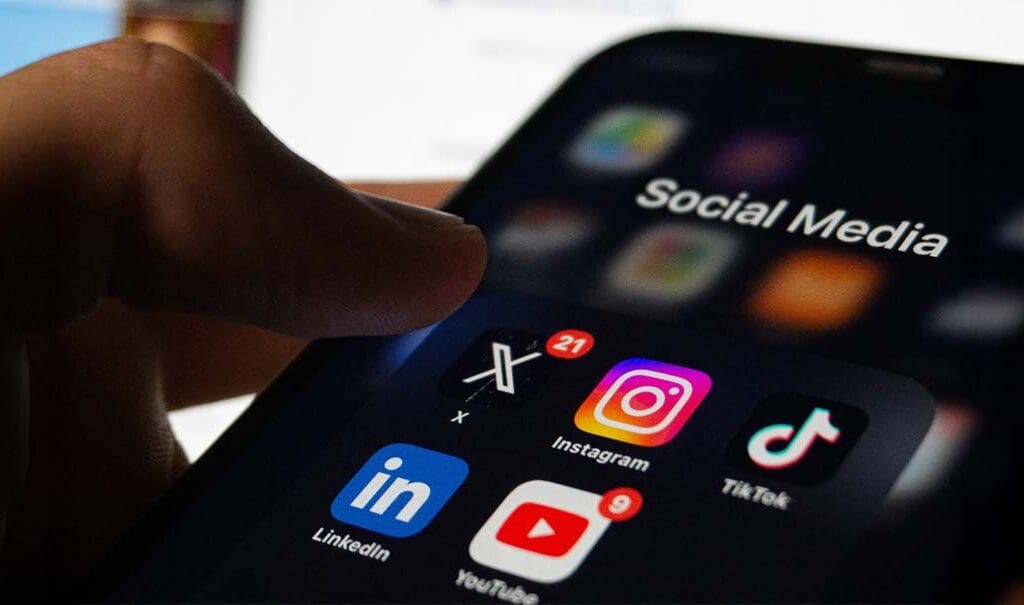
Instagram pulls the highest engagement in the UAE by a fair margin, mostly because it crosses language barriers more easily than caption-heavy platforms do. Arabic and English are the two languages doing the heavy lifting on content here, and users from across Asia, Europe, and the Middle East all have a hand in shaping what actually trends.
Timing Isn’t Just a Footnote
Cultural timing matters more than people give it credit for. Content built around Eid, Ramadan, and UAE National Day pulls in a noticeably wider audience, and posting when your local crowd is actually awake and online — not whatever a generic global “best time to post” chart tells you — makes a real difference.

So, What Does an Actual Bilingual Strategy Look Like?
A few things worth putting into practice if you’re working with a digital marketing agency Abu Dhabi businesses trust, or building this in-house:
- Lead with English for reach, but don’t treat Arabic like a token afterthought; write it as its own piece of content, tuned for the audience reading it.
- Start adjusting for the Arabic-language law now rather than in 2027. Abu Dhabi bilingual marketing that’s already compliant will have a real head start once enforcement kicks in.
- Match your platform choice to language behavior. Instagram rewards bilingual, visual-first posts; work with that instead of against it.
- Build content around cultural moments, not just whatever generic calendar your global templates hand you.
- Track engagement by language, not only by post. If Arabic content is quietly out-performing English on saves and shares, that’s worth acting on, not ignoring.
Quick Questions People Actually Ask
Is Arabic content legally required in the UAE? Not fully, not yet, but consumer-facing ads and contracts already carry Arabic-language requirements under existing consumer protection law, and a broader law is being developed with enforcement expected around 2027.
What percentage of UAE users prefer Arabic vs. English on social media? Roughly 60% lean English, which is unusual next to Egypt (82% Arabic) and Saudi Arabia (96% Arabic). Arabic still drives stronger trust and engagement even where English wins on volume.
Why does my business actually need bilingual social media in the UAE? Because expats make up close to 90% of the population. English gets you seen. Arabic gets you trusted. You need both.
Two Languages, Two Jobs
The UAE was never a market where you pick a lane between Arabic and English. Both are doing separate jobs at the same time; one gets you seen, the other gets you believed. And with a new Arabic-language law taking shape ahead of 2027, the brands building bilingual habits into their content now are the ones that won’t be scrambling to catch up later.