

Something has quietly shifted in how people search for things online, and most businesses haven’t really noticed yet. A few years ago, the whole game was ranking on Google. You optimized your site, climbed the results page, got clicks, hopefully turned those clicks into customers. Simple enough.
But now? A lot of people don’t even open Google first. They ask ChatGPT, Gemini, or Perplexity a question and just get an answer. No scrolling, no comparing five different websites, no real effort involved. The AI tool does the digging for them and hands over a summary.
That’s where GEO comes in, short for Generative Engine Optimization. And honestly, it’s worth paying attention to now, while most of your competitors still aren’t.

Okay, So What Is GEO Actually?
Think of it this way. SEO is about getting your website to show up. GEO is about getting an AI model to actually mention you by name when it’s answering someone’s question.
That’s a meaningfully different goal. With SEO, you’re competing for a spot on a results page. With GEO, you’re trying to become one of the handful of sources an AI model trusts enough to pull information from and repeat.
Say someone in Abu Dhabi asks an AI tool something like “where’s a good place to invest in property right now.” Instead of getting ten links to click through, they get one answer, built from a few sources stitched together. If your content is one of those sources, you’ve just reached someone who’s actively making a decision, without them ever landing on a traditional search page.
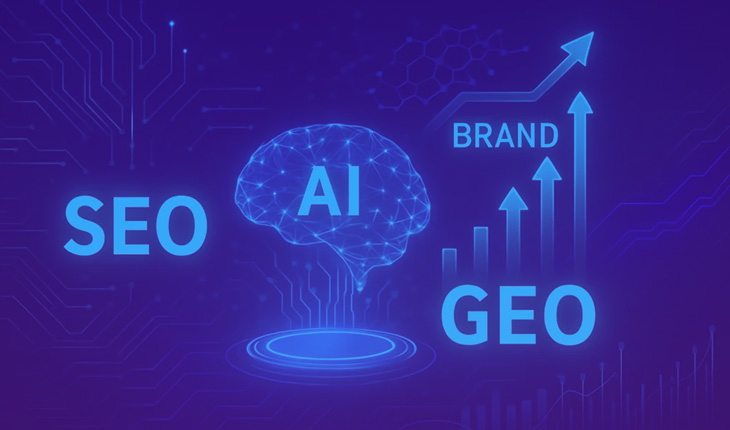
SEO, AEO, GEO, What’s the Actual Difference?
These three get thrown around like they mean the same thing, but they don’t.
SEO is the old familiar one. Keywords, backlinks, on-page tweaks, all in service of ranking higher on Google.
AEO is about answering direct questions well, things like FAQ sections and voice search, the kind of content that gets pulled into those little snippet boxes at the top of a search page.
GEO is the newer one. It’s less about keywords and more about whether your content is detailed, well-sourced, and trustworthy enough that an AI model decides it’s worth quoting. The “platform” isn’t really Google anymore, it’s ChatGPT, Gemini, Perplexity, and whatever comes next.
None of these replace the others, honestly. But GEO is the one almost nobody is doing properly yet, which is exactly why it’s worth getting into early.

Why This Matters Right Now, Not Eventually
More and more people are starting their search inside an AI tool instead of a search engine. The big platforms keep leaning further into giving direct answers instead of just listing links, which means there’s a whole new kind of visibility battle happening that has very little to do with traditional rankings.
In a market like Abu Dhabi, where real estate, hospitality, and professional services are all fighting for attention, this is genuinely an open opportunity. Almost everyone is still putting all their effort into classic SEO. Hardly anyone is thinking about how to actually get cited by an AI model. That gap exists right now. It won’t last forever.

So How Do You Actually Get an AI Model to Mention You?
There’s no secret setting you flip on. But a few things consistently seem to help.
Be specific, not vague. A title like “Best Real Estate Areas in Abu Dhabi” doesn’t give an AI model much to grab onto. Something like “Best Areas to Invest in Abu Dhabi in 2026, With ROI, Pricing, and Rental Yield Data” gives it actual substance to reference.
Use real numbers whenever you can. Saying “Al Reem Island is a solid investment” is the kind of line that gets skimmed past. Saying something closer to “rental yields in Al Reem Island currently fall within a specific range, based on recent market data” is the kind of detail that actually gets picked up and repeated.
Show that you genuinely know what you’re talking about. Google calls this E-E-A-T, experience, expertise, authority, trust. It sounds like a corporate acronym, but the idea is straightforward: write like someone who actually understands the subject, not like someone padding out a page to hit a word count.
Write the way people actually ask questions. If someone would type “is now a good time to buy property in the UAE,” structure part of your content around answering exactly that, in plain language.
Back things up with real sources. Official reports, recent stats, independent studies, anything that adds weight to what you’re claiming. It helps with AI visibility, and frankly it just makes the content better.

Where This Fits Perfectly: Abu Dhabi Real Estate
Real estate content is almost made for this kind of optimization, because so much of it is naturally comparison-based and data-driven, which is exactly what AI tools like to summarize. Things like a yearly Abu Dhabi market report, a forecast for where the property market is heading, a head-to-head comparison like Yas Island versus Al Reem Island, an explainer on the Golden Visa through property investment, or a breakdown of off-plan versus ready properties. All of these naturally lend themselves to being referenced when someone’s trying to make a real decision.

Where This Leaves Us
The question businesses need to start asking isn’t just “how do we rank higher on Google” anymore. It’s becoming “how do we become the source an AI model actually trusts enough to quote.”
For businesses in Abu Dhabi, particularly in real estate and other competitive service industries, now is the moment to start thinking about this, before it becomes something everyone else is already doing too.
At 435 Digital, this is exactly the kind of strategy we help local businesses build, content that performs well in classic search and earns a place inside the answers people are getting from AI tools.