
Open ChatGPT, Perplexity, or a Google AI Overview and ask something in Arabic. Then ask the same question in English. You’ll notice it almost immediately; the English answer feels richer, better sourced, more confident. The Arabic one often feels thinner, sometimes slightly off.
That’s not a coincidence, and it’s not a small issue either. Arabic is the fifth most spoken language in the world, with over 237 million native speakers. But when it comes to AI search visibility, Arabic is punching well below its weight. For any business working with a digital marketing agency in Abu Dhabi that wants to reach Arabic-speaking customers, that’s not just an interesting fact; it’s an opportunity.
The Real Numbers Behind the Gap
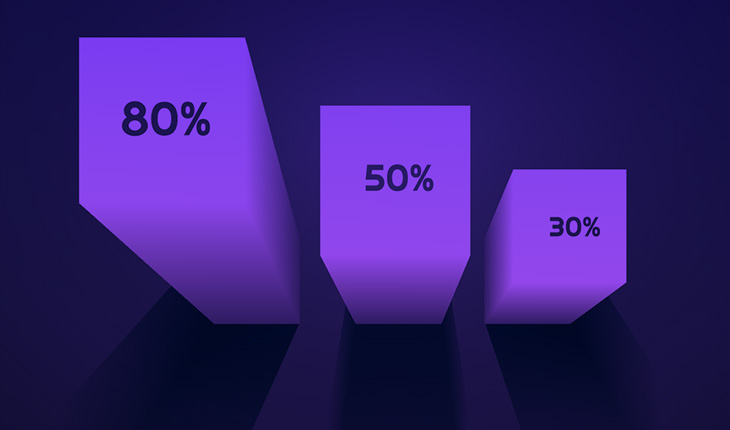
Here’s the part that surprises most people: despite having hundreds of millions of speakers, Arabic makes up only a small fraction of the internet; most estimates put it somewhere between 1% and 3% of all web content. Compare that to the number of people actually searching, scrolling, and typing questions in Arabic every day, and the gap is hard to ignore.
Why does this matter more now than it did five years ago? Because search itself has changed. AI engines don’t just crawl and index pages the way old-school search did; they read content, decide what’s trustworthy, and summarize it directly in the answer. Less Arabic content on the web means less material for AI to draw from, so Arabic-speaking users end up with weaker, less specific answers than English speakers asking the same thing.

Why AI Struggles More With Arabic
This isn’t guesswork; it’s been studied. Researchers have repeatedly found that AI models perform less accurately with Arabic prompts than English ones, and the reason usually traces back to training data. There’s simply less of it, and what does exist skews heavily toward one register of the language.
That register is Modern Standard Arabic. Search engines and AI models have had decades to absorb high-quality MSA from Wikipedia, major news outlets, government sites, and academic papers. What they haven’t absorbed nearly as well is the Arabic people actually speak day to day. Gulf dialect, in particular, is thin on the ground compared to formal Arabic. If your customers are searching the way they talk — which, increasingly, they are — that’s a real blind spot.

The Gulf Is Already Building Its Own Answer
This gap hasn’t gone unnoticed regionally, and Abu Dhabi has been at the center of the response:
- The Technology Innovation Institute (TII) in Abu Dhabi built the Falcon family of open-source AI models, now used by developers worldwide.
- Mohamed bin Zayed University of Artificial Intelligence (MBZUAI), working with G42, developed Jais, an Arabic-first model trained on a huge bilingual dataset and expanded in later versions.
One detail from this work is worth pausing on. When researchers built Arabic benchmarks to test how well these models actually understood the language, they had to throw out questions that were simply translated from English, because those questions tested translation skill, not real comprehension. The takeaway carries over directly to content strategy: translated Arabic isn’t the same as Arabic written for Arabic speakers, and AI systems can tell the difference.

MSA or Dialect? It’s Not Really a Choice Between the Two
This is the question that actually shapes your content plan.
Modern Standard Arabic is the formal written language used across all 22 Arab countries. It’s what gets indexed cleanly, and what any educated Arabic reader can follow, but it’s also not how anyone talks over coffee. Gulf dialect is how people actually speak, and it’s increasingly how they search too, especially through voice search, which by nature sounds like conversation, not a news bulletin.
The strongest approach uses both, deliberately:
- MSA for the core of your written content: blog articles, service pages, anything meant to rank broadly across the Arabic-speaking world.
- Gulf dialect for FAQs, voice-search-friendly phrasing, and ad copy that sounds like how someone in the UAE would actually ask the question.
- If you’re targeting the UAE specifically, local phrasing beats textbook formal Arabic; it matches how people genuinely search.

Less Competition Means Faster Wins
Here’s the upside most brands haven’t caught onto yet: very few companies in this market, and surprisingly few digital marketing agencies working in the UAE, have invested in real, dedicated Arabic content. A lot of high-intent Arabic searches simply don’t have a strong page competing for them.
The practical result? A well-built Arabic article can land on page one within weeks. The equivalent English article, fighting through a far more crowded field, might take months to get there.
What Makes Arabic Content Worth Citing to AI
If the goal is getting AI search engines to actually pull from your content, a few things make a real difference:
- Write original Arabic pages, not a translated version of your English site. AI engines evaluate each language separately, so a translated footer or a bolt-on Arabic page won’t earn you much.
- Put your brand name in Arabic in headlines, meta descriptions, and body text, not only in the English version.
- Structure content around real questions, using FAQ formatting where it fits, so both readers and AI systems can pull out the relevant answer fast.
- Have a human check the dialect content. AI writing tools can produce decent MSA, but none of them reliably nail natural Gulf or Egyptian dialect. That gap only closes with a person reading it out loud and asking, “would someone actually say this?”

The Gap Is the Opportunity
The Arabic content gap isn’t a wall; it’s an open lane. 435 Digital is a digital marketing agency in Abu Dhabi that writes Arabic content from scratch, never translated, blending clean MSA with dialect that actually sounds like the UAE. As a full-service digital marketing agency working across Abu Dhabi and the wider Gulf, we build content for how people actually search, ask questions, and read; not for how a translation tool thinks they should.
If AI search is going to decide who customers find first, the brands that win will be the ones speaking their audience’s real language, not running an English page through a translator and calling it done. That’s the kind of work a genuine agency delivers, not a shortcut.